After starting out wanting to reduce poverty, aid workers often find themselves living a lifestyle unimaginable back home. Does this cause more harm than good?
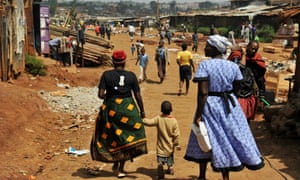 People tell you how much they struggle to pay school fees and you feel ashamed: what you spend on your ticket home could have kept them in education. Photograph: Roberto Schmidt/AFP/Getty Images
Awareness of your own privilege in relation to the rest of the world is often a motivator for people drawn to humanitarian or development work. The ironic twist is that in this profession we are transformed from unremarkable young people into a little aristocracy.
Secret aid worker: sometimes I go to supermarkets to escape the loneliness
Read more
People from the developed world usually feel uncomfortable with the idea of house help at first, but are quickly eased into the idea by convenience and the absence of washing machines and dishwashers. Security is the justification for massive 4x4 vehicles as the only means of transport – there goes the environmentally friendly convictions of former public transport commuters. The same concerns add security guards to the necessary house staff. If you have a garden you can easily have a staff of five people working in your house. Aid workers with children are likely to have a nanny and cook. Throw in a driver and you find yourself managing a 10-staff household.
Then comes the discussions about their salaries. You don’t want to seem stingy and perpetuate the local poverty economy, as you couldn’t live with yourself knowing that someone who works for you is struggling to feed their own children. But at the same time you don’t want to pay an unusually high amount and be taken advantage of, be ostentatious, or give the impression you are very rich.
Your friends make it seem normal to send their house help to do groceries, and that’s attractive because when you show up at the local farmer’s market you get mobbed like a celebrity. Every time you park your car it is surrounded by people begging and you can’t justify going around town distributing dollars left, right and centre. The other expatriates don’t seem to do that. Suddenly the level of inequality you saw in your home country is nothing compared to the inequality in your duty station. Now there is no denying you are the privileged 1%.
Some days you have more money in your pocket than most people will make in a year. You hear tales of someone’s daughter who would be delighted to come iron your clothes for a bit of pocket money. People tell you frequently of how much they struggle to pay school fees for their six or 11 children, or to send their kids to university. You feel ashamed of yourself. What you spent on your ticket home for rest and relaxation could have kept all their children in school for years. But you also tell yourself that they should know the importance of family planning. You become unsure of the moral ground.

Secret aid worker: NGOs rarely say no to corporate cash
Read more
With time, you get used to the high salaries, the allowances, perks and generous leave. But as you spend more time in bureaucratic office jobs than carrying out food distributions to the starving, you ask yourself whether you are giving back to the world at all. You question whether you are in that place to help the local people or to help yourself. It has to be wrong to arrive in someone’s country and have a better quality of life than 99% of the local population, to roll around the place in your huge land cruiser throwing dust on to the locals.
During your work time you are trying to address issues related to poverty and war, but in your free time you and your friends go out and get drunk, laugh, dance, are very loud and behave like teenagers who recently found freedom. You see expatriates taking home local prostitutes at the end of the night. You ask yourself what kind of values you are projecting and what kind of impression you are leaving on the local people, but then you get too drunk to care all that much.
Do you have a secret aid worker story you’d like to tell? You can contact us confidentially at globaldevpros@theguardian.com – please put “Secret aid worker” in the subject line.
Join our community of development professionals and humanitarians. Follow@GuardianGDP on Twitter.
Comments