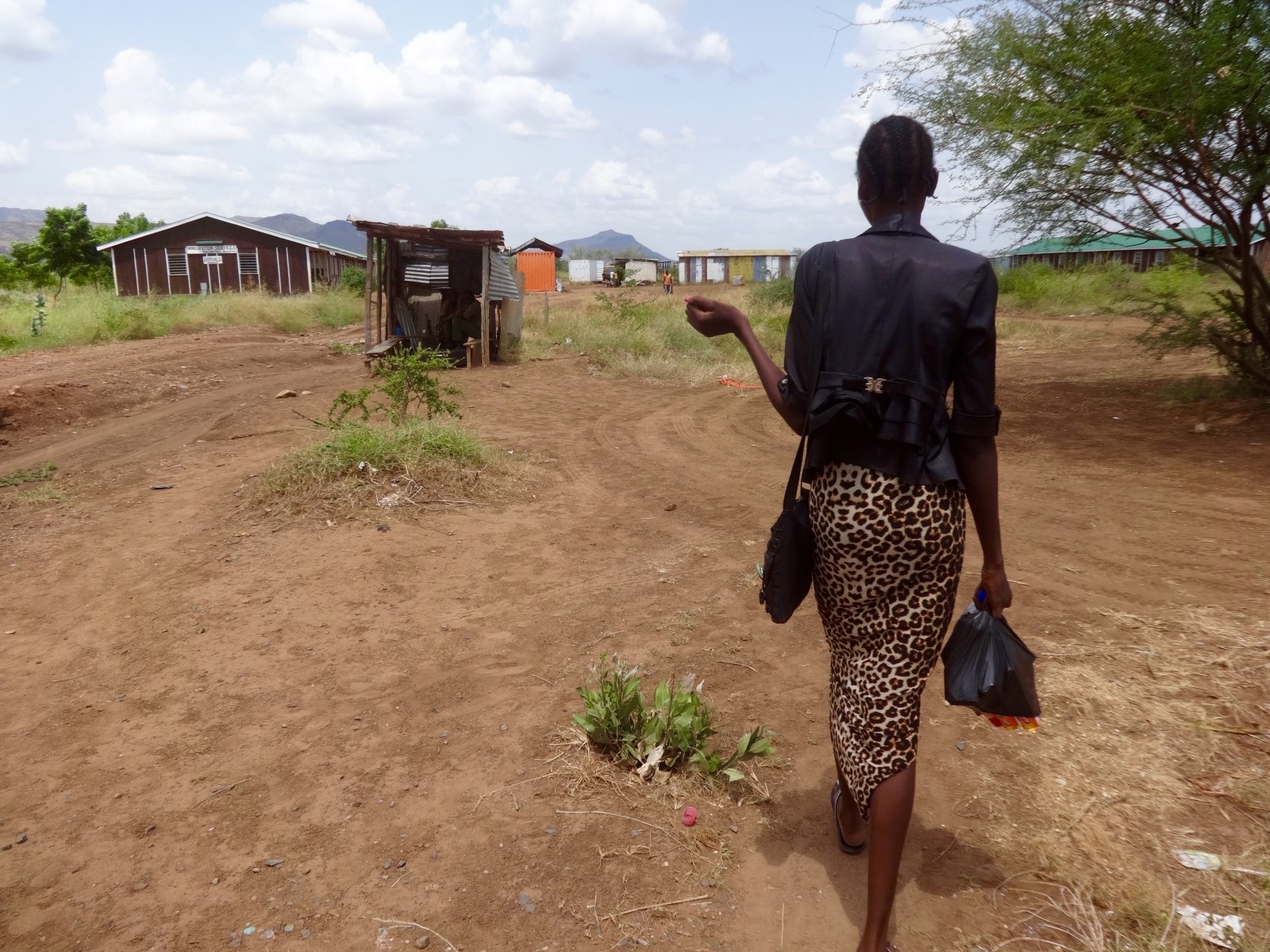
 Randa, a 24-year-old asylum seeker from South Sudan, tries to cross the border into Kenya as she seeks refuge after fleeing insecurity in her countryElsa Buchanan for IBTimes UK
It was the civil war in South Sudan that separated Randa from her family in 2013. While the 24-year-old stayed in the South Sudanese capital Juba during the fighting, her mother and six brothers and sisters sought asylum in neighbouring Kenya's second largest refugee camp, Kakuma, in 2014. Now, the young woman, who had no one left in South Sudan, decided to join her family.
With only a bag and a suitcase, she used the little money she had to pay for transport to reach the South Sudan-Kenya border, located two hours' drive from Kakuma on dusty roads. Assuming the Nadapal border – the only point of entry from South Sudan into Kenya – was open and officials would allow her free access to seek asylum, Randa arrived on Wednesday 15 June in the early hours.
After the disbanding of Kenya's Department of Refugee Affairs (DRA), there was a creation of a new entity – refugee Affairs Secretariat (RAS) – which filled the gap left by DRA. However, little did she know that the RASmay have issued an order from the Kenyan government to the immigration officers in the country's side of Nadapal.
IBTimes UK visited the border after UN's refugee agency (UNHCR) officials made the claim that Kenyan immigration was denying access to asylum seekers on the territory – which is against international law.
Speaking to IBTimes UK, one of the agency heads of sub-office in Kakuma said there were "concerns about an issue with asylum seekers reported at Nadapal". Kakuma is home to around 190,000 refugees.
According to the official, around 300 Sudanese fleeing instability, armed militias, drought and food insecurity arrive at Nadapal every week. That's 1,200 a month on average, most of them coming from Sudan's Eastern Equatorial province.
After leaving the South Sudanese checkpoint at the border, these people are registered as 'asylum seekers' by Kenyan immigration, enabling them to access a reception centre in Nadapal run by the Lutherian World Federation (LWF). There, they are treated, housed and fed until they are transported to the Kakuma camp. Many arrive at the border extenuated, hungry and traumatised, and these services may be the first they have received in a long time.
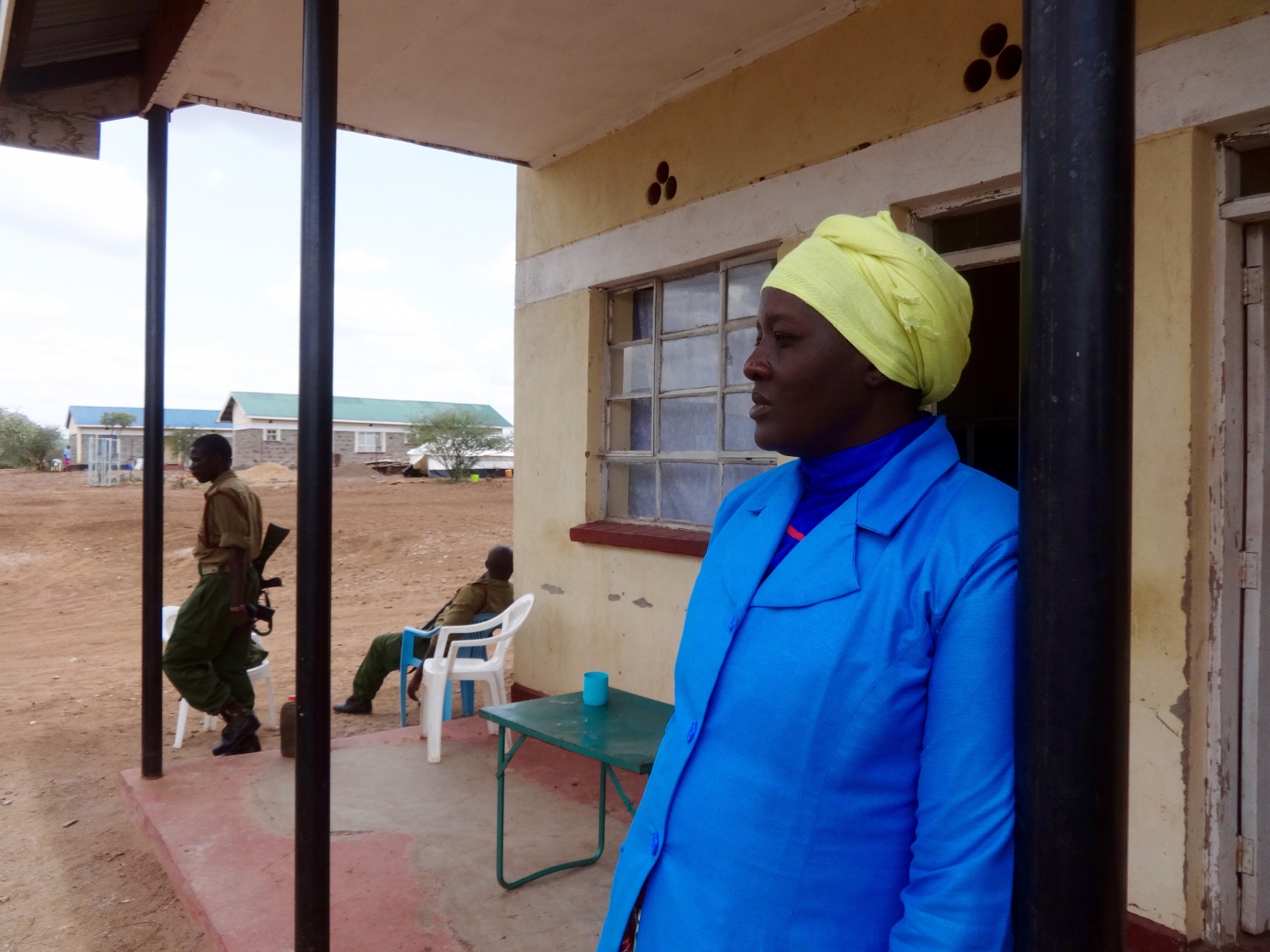
A Lutherian World Federation (LWF) social worker, who works at the Nadapal reception centre for asylum seekers, waits for people to arrive at the empty centreElsa Buchanan for IBTimes UK. At least 300 asylum seekers turned back
Since 26 May, the official alleged that hundreds of asylum seekers had been denied access to the territory, and had been sent back to South Sudan, the country they were fleeing from. The official said the stream of asylum seekers arriving at Kakuma refugee camp has thinned drastically.
Totalling 73, the last group of asylum seekers was transported to Kakuma camp on 8 June after spending weeks at the reception centre. A UNHCR officer, who conducted a border monitoring and asked not to be named, said the issue "has been going on for two weeks".
In South Sudan, Augustino Atem Aner, chief of immigration, told IBTimes UK, "the issue of returning refugees is not on our side, but on the Kenyan side". The South Sudanese immigration office facilitates the issue of asylum seekers' documents for people who have no passports or documents from Juba.
However, following a "verbal order" issued by the Kenyan authorities, Atem Aner said he had been instructed by his Kenyan counterpart to tell asylum seekers to enter Kenya on a 'visitor' permit. Once they enter Kenya on this permit, they can not apply for refugee status and therefore cannot receive any support.
The 'visitor' visa costs US$50. Those who cannot pay $50 are sent back to Sudan, Atem Aner told IBTimes UK on the South Sudanese side of Nadapal border. "Those who come and can't pay are returned and have to find means to go back where they came from", he said, adding that a "formal order has never been handed over to us".
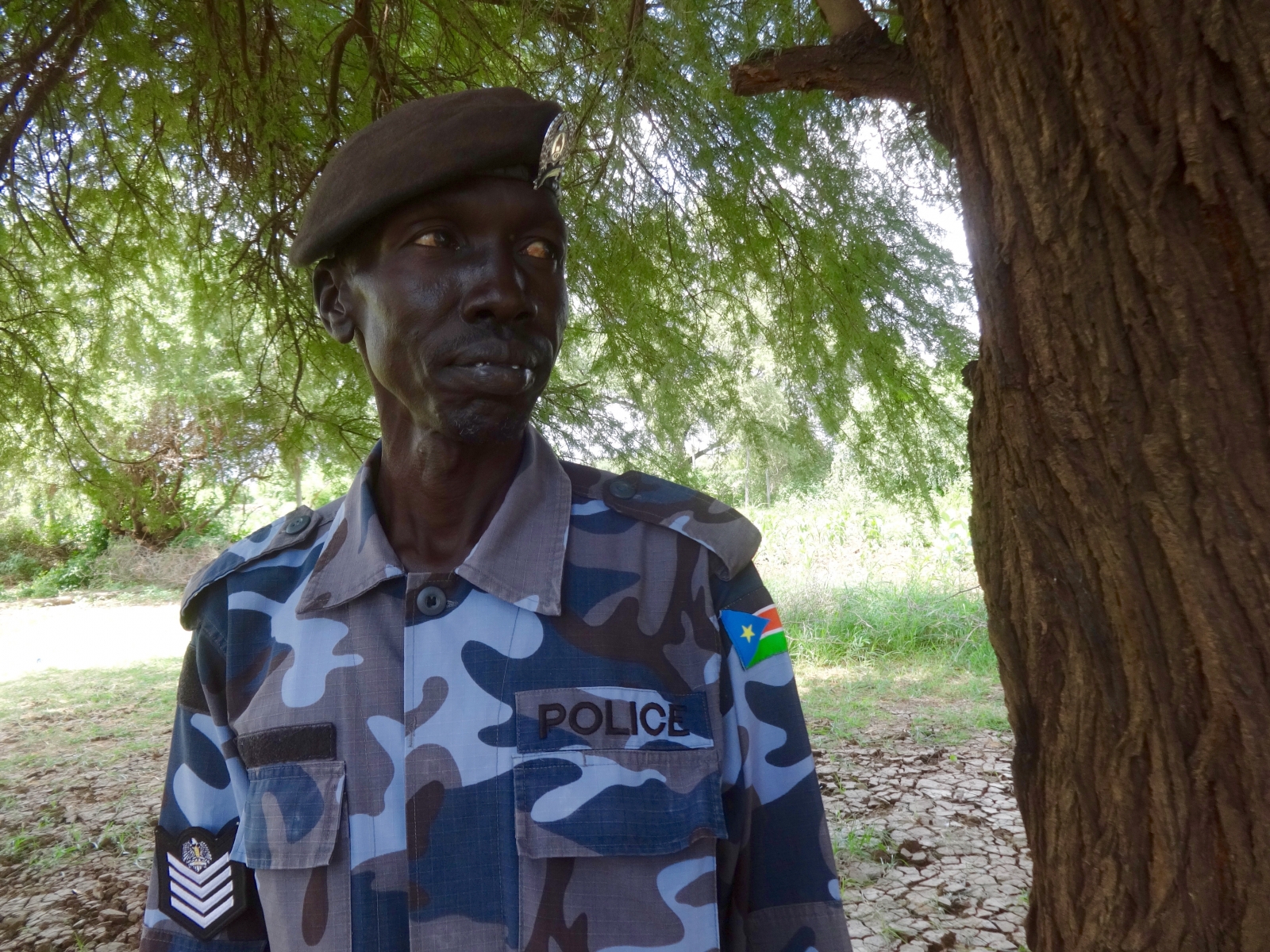
A South Sudanese border official, who has been working at Nadapal, says he has witnessed South Sudanese asylum seekers being turned back by Kenyan officialsElsa Buchanan for IBTimes UK
Meanwhile, an unknown number of people – many believed o be asylum seekers – have crossed the border with a 'visitor' document. This makes them ineligible for asylum services in Kakuma camp, making them susceptible to deportation upon expiration of the 'visitor' status.
In the last week, Atem Aner said, he "regrettably" witnessed between 60 and 100 South Sudanese asylum seekers who had been denied access. "We don't know what happens to them once they are sent back," he added.
Pregnant women returned three times
Another immigration chief, Peter Deng, told IBTimes UK colleagues had decided to spend their own money on food for asylum seekers stranded at the border. In many cases, he said, they had spent their savings on transport to the border and had no means of buying food or transport back to the nearest town – around 20 minutes away. The head of immigration confirmed he had been waiting for an order from the Kenyan authorities to resume normal access and deliver asylum seekers' documents since 18 May.
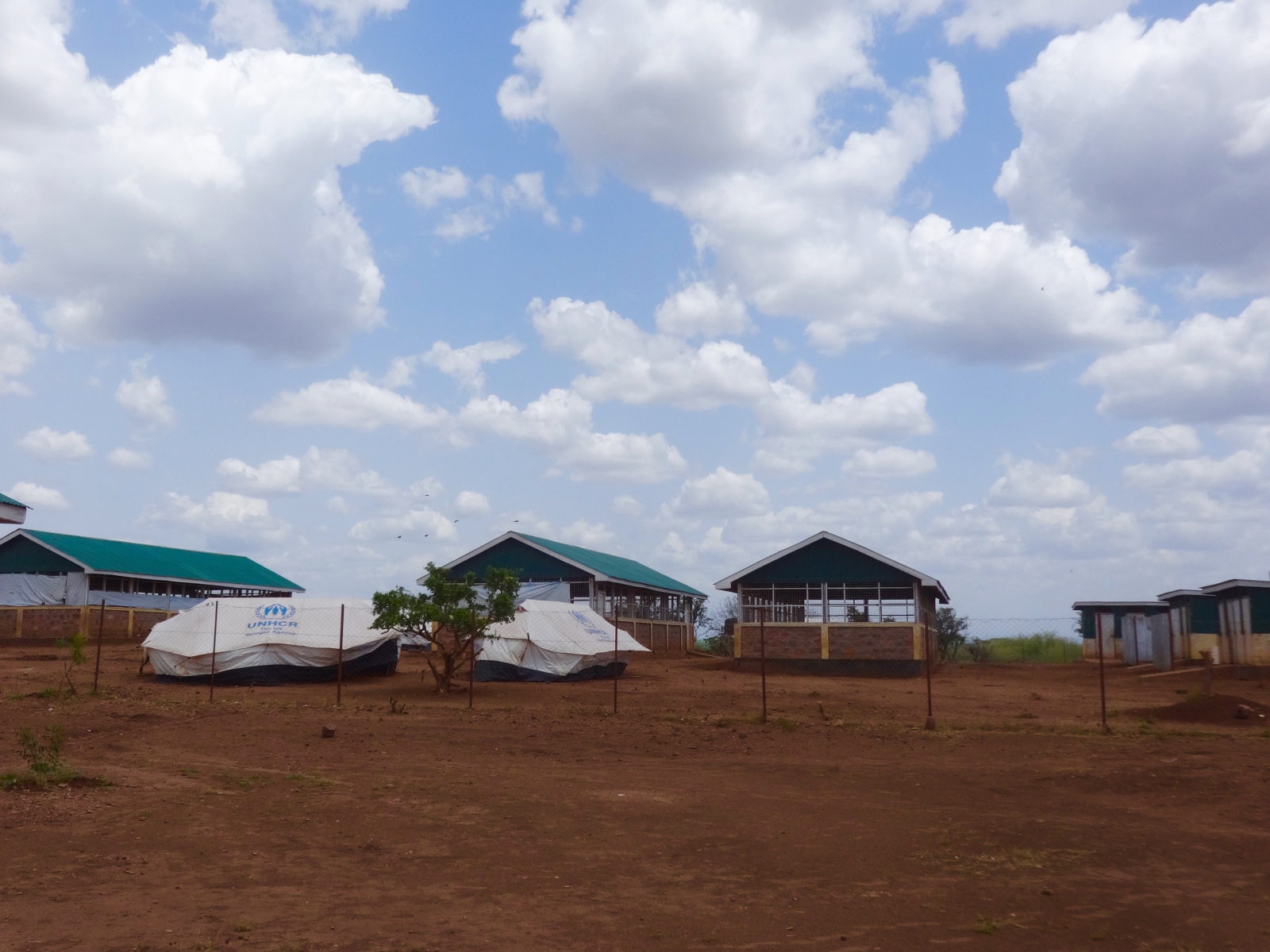
The Nadapal reception centre for asylum seekers is empty as many have been denied entryElsa Buchanan for IBTimes UK
Many asylum seekers are vulnerable – Atem Aner cited the example of a heavily pregnant woman "about to be due" who was turned back at the Kenyan border three times. Randa was in the same situation when IBTimes UK met her in South Sudan. After 36 hours spent alone at the border, she was tired, hungry and without money for a visa or transport. Her mother, she said, was expecting her in Kakuma camp. She didn't know how long she would stay stranded before being allowed into Kenya.
A LWF protection officer, working at Nadapal reception centre which was empty, told IBTimes UK that she was aware that unaccompanied minors had been sent back, and were taking dangerous routes to try to get through the border.
A minor, who had been separated from his family by the war and had been denied entry, was picked up by Atem Aner's team after walking 15km through the bush. "All his family is in Kakuma (located around 50km from the border), and he was trying to cross the border alone into Kenya through the bush," Atem Aner confirmed.
In other cases, South Sudanese officials said they have been forced to "attach" children to other groups of asylum seekers – they are not allowed to let minors go through without a relative or guardian. Deng added taxi drivers had been found transporting children in their boot through the border.
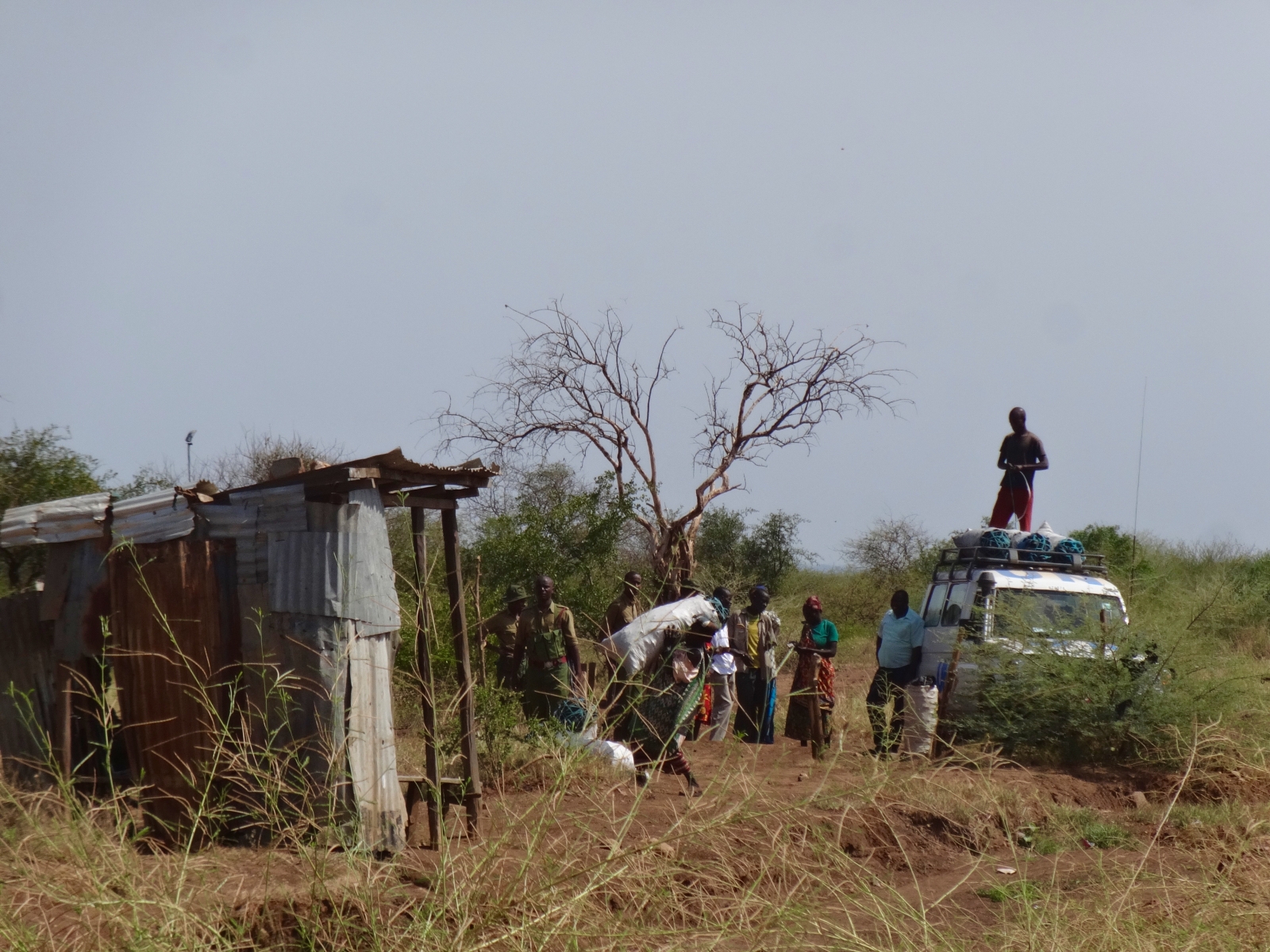 An unknown number of people – many believed to be asylum seekers - have crossed into Kenya with a ‘visitor’ document. This makes them ineligible for asylum services in Kakuma camp and susceptible to deportation upon expiration of ‘visitor’ statusElsa Buchanan for IBTimes UK
'People need refuge, they are helpless'
A former DRA officer, now working for the newly founded RAS, told IBTimes he was aware of the fact that asylum seekers "have not been allowed to go through". In an informal meeting with LWF and South Sudan's Nadapal office, the RAS officer told participants that "as of tomorrow, we expect people to be crossing – especially those who seek asylum".
"It's a matter of urgency. We are still operational, and we were assured we'd get a letter today from the Director of Immigration, following a meeting with the District Commissioner", the RAS officer, who asked not to be named, said.
During IBTimes UK's visit at the border, a group of people – believed to be asylum seekers – who were able to pay for a 'visitor' visa, were asked to pay 2,000 South Sudan dollars, instead of the required 5,000.
"Why not the full fee?" enquired the RAS officer, who also witnessed the transaction and noted an official stamp had been put on the South Sudanese's documents. Speaking to the RAS officer, Deng added: "We hope to see some changes, these people need refuge, they are helpless."
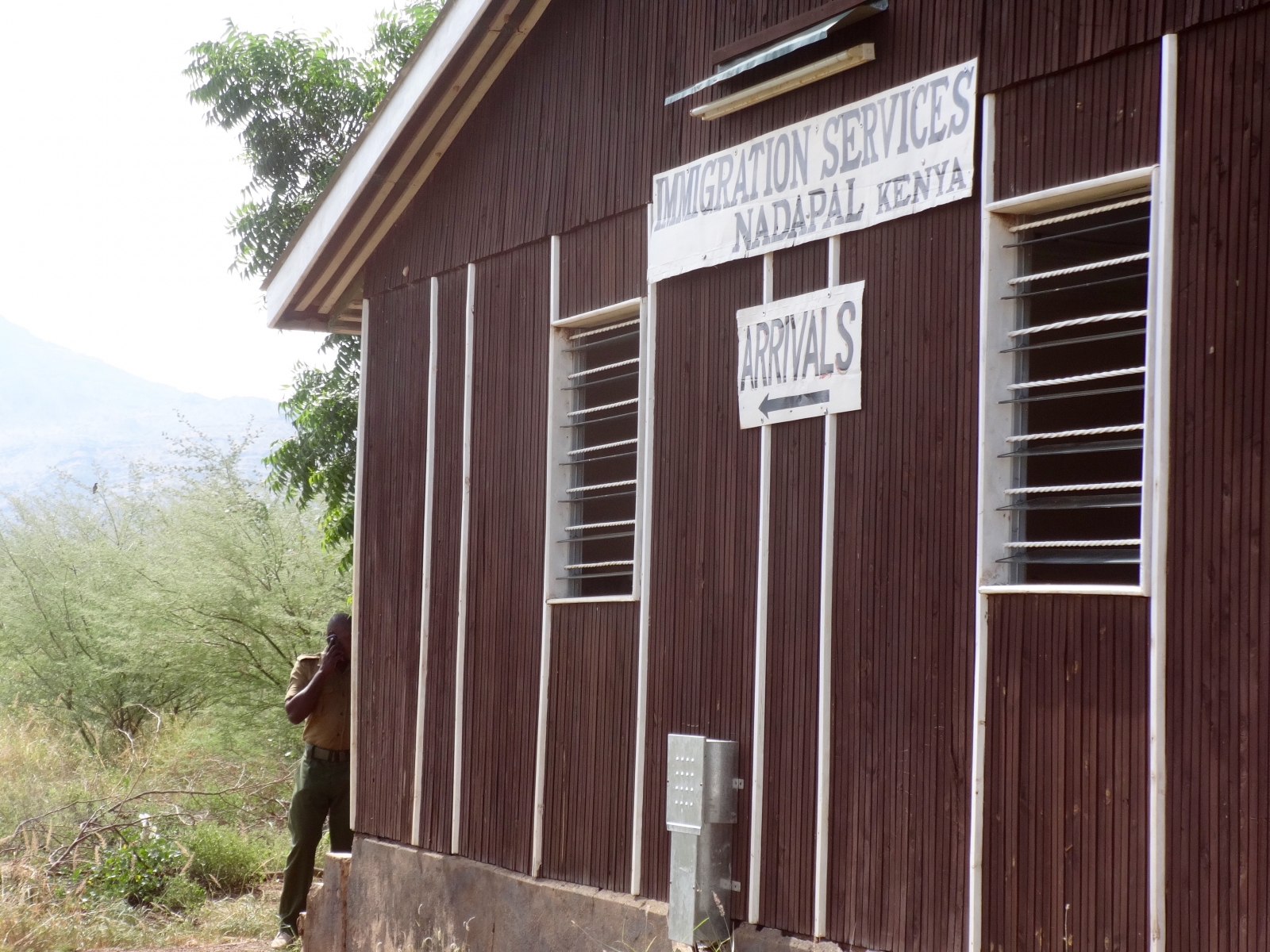 Kenyan border officials have been denying asylum seekers entry into Kenya, according to the humanitarian agencies, the Kenyan Refugee Affairs Secretariat and South Sudanese officialsElsa Buchanan for IBTimes UK
Having heard about Randa's story, however, the RAS officer pressed the Kenyan head of immigration to allow her into Kenya and claim asylum. After the head of immigration accepted and stamped her documents, a doctor at the Kenya Immigration office saw Randa for an initial screening – the young woman said she was feeling unwell.
After around 30 minutes, she emerged, smiling, from the office with her documents – and boarded a UNHCR vehicle, which drove her to Kakuma camp where she knew her family was waiting for her. Upon arrival at the camp's reception centre, Randa underwent a thorough medical screening and processing of documents for asylum seekers, as well as received food as she waited to be reunited with her mother. Randa said she considered herself "lucky".
When asked to comment on claims that Kenyan government officials had been denying access to South Sudanese asylum seekers since the end of May, the head of immigration told IBTimes UK the confusion surrounding border access had followed the DRA disbanding. "There is no clear picture about the order. According to me, the border is open. If they want to come to seek asylum as usual, they can come." The Immigration Department has not provided reasons for not allowing South Sudanese asylum seekers to access the territory of the country.
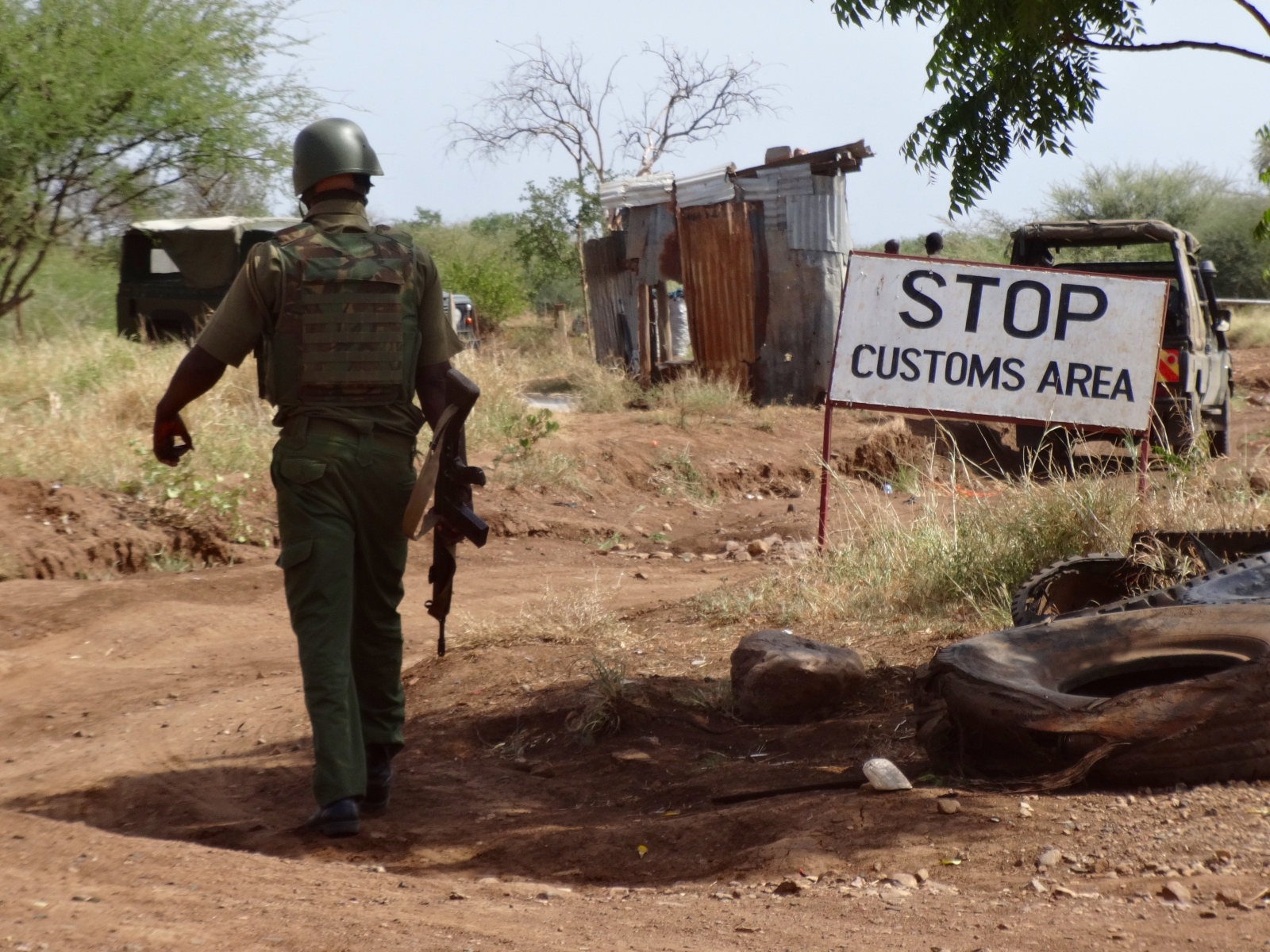 A Kenyan security officer walks towards the Kenya and South Sudan border check point in Nadapal on 16 June Elsa Buchanan for IBTimes UK
Comments